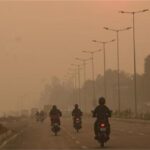


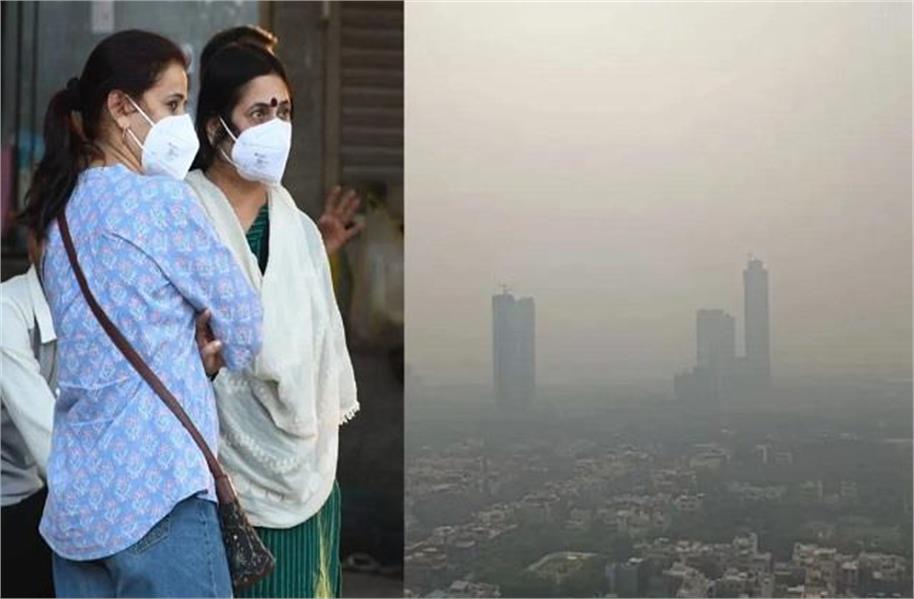
The air quality crisis in North India has deepened once again as Noida and Greater Noida recorded the most hazardous pollution levels in the country on Friday. According to data from the Central Pollution Control Board (CPCB), Noida’s Air Quality Index (AQI) shot up to 406, while Greater Noida followed with an AQI of 386—both falling under the “Severe” category. This indicates that even healthy individuals may experience breathing difficulties, throat irritation, headaches, chest discomfort, and reduced visibility.
NCR Chokes Under a Toxic Smog Blanket
The situation is especially worrisome across the National Capital Region (NCR), where the air has deteriorated sharply due to a combination of vehicular emissions, stubble burning, industrial pollution, construction dust, and stagnant weather conditions. Delhi itself recorded an alarming AQI of 385, bordering on “Severe.” A thick layer of smog has reduced visibility in several parts of the capital, affecting traffic movement and raising health concerns among residents.
Neighboring Haryana also reported dangerously polluted air. Dharuhera registered an AQI of 386, while Manesar recorded an AQI of 368. These cities remain under the “Very Poor to Severe” category, indicating high levels of PM2.5 and PM10—harmful microscopic particles that penetrate deep into the lungs.
Top 10 Most Polluted Cities Today
Based on CPCB data, the following cities recorded the worst air quality in the country:
- Noida – AQI 406 (Severe)
- Dharuhera – AQI 386 (Severe)
- Greater Noida – AQI 386 (Severe)
- Delhi – AQI 385 (Very Poor/Severe)
- Manesar – AQI 368 (Very Poor)
- Ghaziabad – AQI 353 (Very Poor)
- Sonipat – AQI 349 (Very Poor)
- Faridabad – AQI (Very Poor) (exact value fluctuating between 330–350)
- Gurugram – AQI (Very Poor) (mid-300 range)
- Ballabhgarh – AQI (Very Poor)
(Note: AQI values may slightly vary depending on monitoring stations.)
Health Experts Issue Warning
Doctors across NCR have advised residents—especially children, elderly people, pregnant women, and those with asthma or heart issues—to avoid outdoor activities. Hospitals report a rise in respiratory complaints, including wheezing, coughing, burning eyes, and breathlessness.
Health experts suggest wearing N95 masks outdoors, using air purifiers indoors, and staying hydrated to minimize the effects of toxic air. They also emphasize avoiding early morning and late evening walks, as pollution levels peak during these hours.
Government Measures and Public Response
Authorities in several NCR cities have intensified anti-pollution measures such as water sprinkling, curbing construction dust, and enforcing bans on firecrackers and certain types of vehicles. Delhi and Noida administrations are also planning stricter implementation of the Graded Response Action Plan (GRAP).
However, environmental activists argue that these steps are reactive and short-term. They stress the need for stronger long-term policies, including cleaner public transport, better urban planning, strict industrial regulation, and sustainable agricultural practices.