

National Desk:
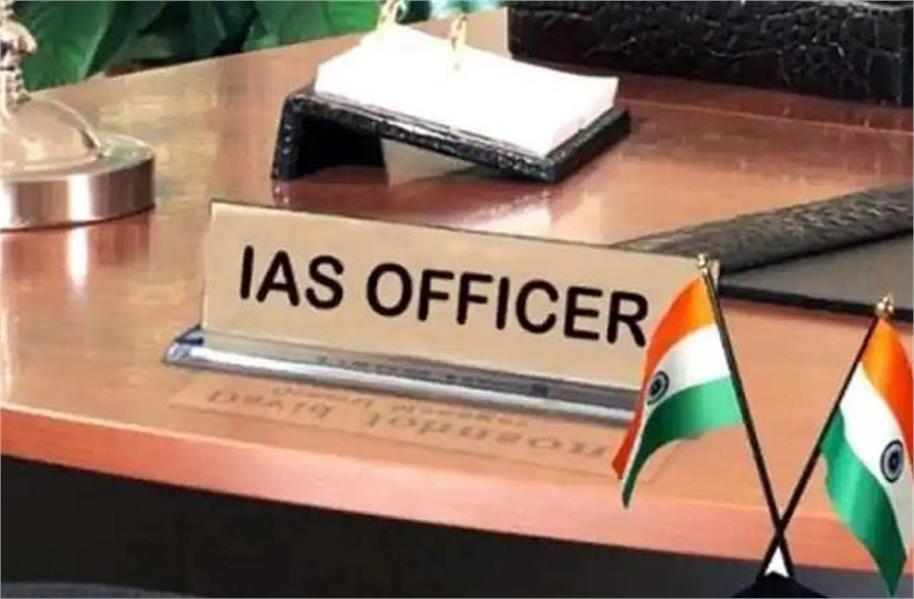
The Indian Administrative Service (IAS) is considered one of the most prestigious and responsible government services in India. Every year, millions of candidates dream of becoming an IAS officer by clearing the Civil Services Examination conducted by the Union Public Service Commission (UPSC). However, the real administrative journey begins after clearing the exam. Through training, initial postings, and continuous promotions, an officer gradually rises to the highest administrative positions. Let’s understand how the career of an IAS officer progresses after selection.
Rigorous Training in Mussoorie
After being selected through the Civil Services Examination, candidates are sent for training at the Lal Bahadur Shastri National Academy of Administration (LBSNAA) in Mussoorie, Uttarakhand.
The training process lasts for about two years in different phases. During this period, officers are taught several important aspects related to administration, including:
- Public administration and policy making
- Law and governance system
- Implementation of government schemes
- Disaster management
- Public relations and leadership skills
- Ethical governance
The training includes the Foundation Course, Professional Training, and Field Training, which helps officers gain practical, ground-level administrative experience.
First Posting: Administrative Career Begins as SDM
After completing their training, newly appointed IAS officers are usually posted as Sub-Divisional Magistrate (SDM), Assistant Collector, or Joint Magistrate.
This role involves managing the administration of a sub-division within a district. Officers at this level handle several important responsibilities such as:
- Maintaining law and order
- Revenue collection and resolving land-related issues
- Monitoring the implementation of government schemes
- Addressing public grievances
- Supervising development projects
This phase is considered the most crucial stage for an IAS officer to learn administration at the grassroots level.
How Promotions Work in IAS
Promotions in the IAS depend mainly on years of service, performance reports, and availability of posts. The rules governing promotions are decided by the Department of Personnel and Training (DoPT).
An officer’s Annual Performance Appraisal Report (APAR) also plays a key role in determining promotions.
Typical Promotion Timeline in an IAS Career
According to the 7th Pay Commission, the career progression of an IAS officer generally follows this timeline:
0–4 Years
Junior Time Scale
- Position: SDM / Assistant Secretary
- Basic Pay: ₹56,100 (Level 10)
4–9 Years
Senior Time Scale
- Position: Additional District Magistrate (ADM) / Deputy Secretary
- Basic Pay: ₹67,700 (Level 11)
9–12 Years
Junior Administrative Grade
- Position: District Magistrate (DM) / Collector
- Basic Pay: ₹78,800 (Level 12)
13–16 Years
Selection Grade
- Position: Joint Secretary (Central Government) / Special Secretary (State)
- Basic Pay: ₹1,44,200
16–25 Years
Super Time Scale
- Position: Additional Secretary / Principal Secretary
- Basic Pay: ₹1,82,200
25–30 Years
Higher Administrative Grade
- Position: Secretary (State or Central Government)
34–36 Years
Chief Secretary (Highest Administrative Post in a State)
- Basic Pay: ₹2,25,000
37 Years or More
Cabinet Secretary – The Highest Administrative Position in India
- Basic Pay: ₹2,50,000
Training and Performance Also Matter
IAS officers also undergo Mid-Career Training Programs (MCTP) during different phases of their careers. Officers with outstanding performance may receive important responsibilities and postings earlier than usual, while others generally receive promotions according to the standard timeline.
More Than a Job – An Opportunity to Serve the Nation
The journey of an IAS officer is not just about rank and salary. It is also an opportunity to shape governance and bring positive change to society. This is why every year millions of young aspirants prepare for the UPSC examination, making the IAS one of the most respected and sought-after services in India.